
Unbounce Alternative: Choosing the Right Landing Page Builder for Your Business
Published Jul 21, 2026 | Updated Jul 21, 2026Landing pages play a crucial role in digital marketing by helping businesses capture leads, promote products, and drive conversions. Whether you’re running paid advertising campaigns or building email lists, having the right landing page builder can make campaign management more efficient and effective.
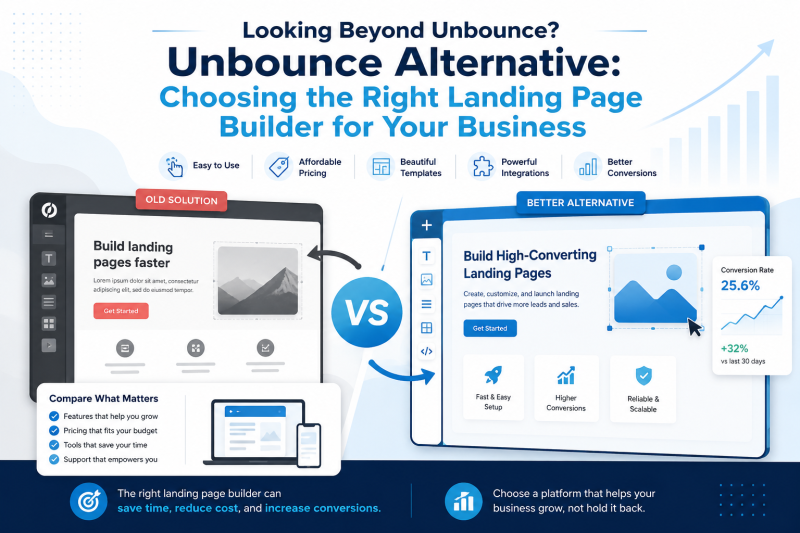
While Unbounce is one of the well-known landing page platforms, many businesses explore other options based on their specific requirements, budget, and preferred workflow. If you’re searching for an unbounce alternative, understanding the features and capabilities that matter most can help you make a well-informed decision.
- Why Businesses Look for Alternatives
- Key Features to Consider
- Easy Drag-and-Drop Editor
- Responsive Design
- Customizable Templates
- A/B Testing
- Analytics and Performance Tracking
- Third-Party Integrations
- Types of Landing Page Solutions
- Small Businesses
- Marketing Agencies
- Enterprise Organizations
- AI-Powered Platforms
- Important Factors Beyond Features
- Ease of Use
- Page Speed
- Scalability
- Security
- Best Practices for Effective Landing Pages
- Final Thoughts
- Frequently Asked Questions (FAQs)
- 1. Why do businesses look for an Unbounce alternative?
- 2. What features should I consider in a landing page builder?
- 3. Can I build landing pages without coding?
- 4. Is A/B testing necessary for landing pages?
- 5. Do landing page builders support third-party integrations?
- 6. Are landing page builders suitable for small businesses?
- 7. Why is mobile responsiveness important for landing pages?
- 8. How do I choose the right landing page builder?
Why Businesses Look for Alternatives
Every business has unique marketing needs. A solution that works well for one organization may not be the best fit for another. Some of the common reasons businesses evaluate alternative landing page builders include:
- Different pricing preferences
- Easier page creation experience
- Better collaboration for teams
- Flexible integrations
- Advanced customization options
- Built-in analytics and reporting
- AI-powered content and design tools
Rather than choosing software based solely on popularity, businesses often prioritize platforms that align with their marketing objectives.
Key Features to Consider
Easy Drag-and-Drop Editor
A visual page builder allows marketers to create professional landing pages without writing code. This reduces development time and enables faster campaign launches.
Responsive Design
Visitors access websites from a wide range of devices. A landing page builder should automatically create responsive pages that provide an optimal experience on desktops, tablets, and smartphones.
Customizable Templates
Ready-made templates can significantly reduce design time while providing a solid starting point for different campaign types. The ability to customize layouts, colors, and branding is equally important.
A/B Testing
Testing multiple versions of a landing page helps marketers identify which design, headline, or call-to-action generates the highest conversion rate. Regular testing supports continuous optimization.
Analytics and Performance Tracking
Built-in analytics or integrations with external analytics platforms help businesses measure visitor behavior, conversion rates, and overall campaign performance.
Third-Party Integrations
Landing page builders should integrate seamlessly with CRM platforms, email marketing software, marketing automation tools, payment gateways, and analytics services to simplify lead management.
Types of Landing Page Solutions
Today’s landing page builders cater to different business sizes and industries.
Small Businesses
Simple, affordable platforms with intuitive interfaces help smaller teams launch campaigns quickly without requiring technical expertise.
Marketing Agencies
Agency-focused solutions often include multiple workspaces, client management features, collaboration tools, and reusable templates.
Enterprise Organizations
Larger businesses may require advanced personalization, security features, user permissions, scalability, and workflow management.
AI-Powered Platforms
Many modern landing page builders now incorporate artificial intelligence to assist with page design, content generation, optimization suggestions, and campaign improvements.
Important Factors Beyond Features
Selecting the right landing page builder involves more than comparing feature lists.
Ease of Use
An intuitive interface helps teams become productive quickly and reduces the learning curve.
Page Speed
Fast-loading landing pages improve user experience and often contribute to better conversion rates while supporting advertising performance.
Scalability
As marketing campaigns grow, your landing page platform should support increased traffic, additional users, and larger numbers of landing pages without sacrificing performance.
Security
Secure hosting, SSL support, reliable uptime, and data protection features help maintain visitor trust and ensure stable campaign performance.
Best Practices for Effective Landing Pages
Regardless of which platform you choose, following proven landing page practices can improve campaign results.
- Focus on one clear conversion goal.
- Write a compelling headline that communicates value.
- Keep page layouts clean and distraction-free.
- Use concise forms that request only essential information.
- Include strong calls-to-action.
- Add testimonials or social proof where appropriate.
- Optimize images for faster loading.
- Continuously test and refine page elements.
- Ensure pages perform well on mobile devices.
Successful landing pages combine good design, persuasive messaging, and ongoing optimization.
Final Thoughts
The market for landing page builders continues to expand, offering businesses a wide range of capable solutions. Instead of selecting software based solely on brand recognition, evaluate platforms according to your marketing goals, budget, collaboration needs, integrations, and long-term scalability.
By comparing features that directly support your workflow and campaign objectives, you can choose a landing page builder that helps create engaging experiences, improve conversion rates, and support sustainable business growth.
Frequently Asked Questions (FAQs)
1. Why do businesses look for an Unbounce alternative?
Businesses often explore alternatives to find a platform that better matches their budget, workflow, customization needs, integrations, or team collaboration requirements.
2. What features should I consider in a landing page builder?
Look for features such as a drag-and-drop editor, responsive templates, A/B testing, analytics, CRM integrations, page speed optimization, and customization options.
3. Can I build landing pages without coding?
Yes. Most modern landing page builders offer no-code editors that allow users to create, edit, and publish landing pages using a visual interface.
4. Is A/B testing necessary for landing pages?
A/B testing helps identify which version of a landing page performs better by comparing different elements such as headlines, images, forms, or call-to-action buttons, leading to improved conversion rates.
5. Do landing page builders support third-party integrations?
Yes. Many platforms integrate with CRM systems, email marketing tools, analytics platforms, payment gateways, and marketing automation software to streamline campaign management.
6. Are landing page builders suitable for small businesses?
Yes. Many landing page builders are designed for businesses of all sizes and offer user-friendly interfaces, affordable pricing, and scalable features.
7. Why is mobile responsiveness important for landing pages?
A responsive landing page automatically adjusts to different screen sizes, providing a better user experience for visitors using smartphones, tablets, or desktop computers.
8. How do I choose the right landing page builder?
Compare platforms based on pricing, ease of use, available templates, integrations, analytics, customization, scalability, and customer support to find the best fit for your business.